Photoluminescent Film: How to Evaluate Real Performance Data (2026 Buyer's Guide)
Our team just attended the 2026 APPPEXPO in Shanghai. During the exhibition, we had more than 100 deep-dive conversations with international buyers. Interestingly, the most frequent question wasn't about price, and it wasn't about MOQ.
Instead, a buyer would pick up a sample of our photoluminescent film, cup their hands over it to block the light, and ask: "How do we know your photoluminescent film actually glows for the hours you claim?"
That question tells you everything about where this industry is right now. Photoluminescent film is one of the most misrepresented products in the safety materials market. Nearly every supplier throws out a number—"6 hours," "8 hours," "10 hours"—yet almost none of those claims can be independently verified or compared.
As a 23-year manufacturer of photoluminescent materials, we want to clear the air. This guide explains how photoluminescent film's performance is actually measured, what international standards require, and the exact documentation you should demand before placing an order.

Why "Glows for 8 Hours" Is Not a Performance Specification
The most common question buyers ask about photoluminescent film is how long it glows.
Photoluminescent film does not maintain a constant brightness for 8 hours and switch off. It peaks immediately after excitation, then decays continuously along a curve. Two films from different suppliers can both "glow for 8 hours", but without statistic backing up, it is just a quick sales pitch.
For evaluating the brightness of the glow in the dark film, a valid afterglow intensity performance measurement requires:
- A specified excitation light source (typically D65, 1000 lux)
- A defined charging duration (typically 5 minutes)
- A controlled test temperature (typically 25°C)
- Brightness measurements taken at standardized time intervals (look for numbers taken at 10 minutes and 60 minutes)
The Standard That Defines Photoluminescent Film Performance
The reality is, global safety standards don't measure time; they measure luminance.
ISO and the PSPA (Photoluminescent Safety Products Association) provide the globally recognized classification framework for photoluminescent material. The primary standard for photoluminescent safety sign is ISO 17398, which defines minimum performance requirements based on luminance measurements at two critical time points.
At 10 minutes post-excitation:
The crucial window immediately following a power failure, when people begin evacuating.
At 60 minutes post-excitation:
This covers extended emergency scenarios, including complex evacuations, structural incidents, and situations where primary escape routes are blocked.
Below table is the ISO17398 luminance classification requirement that buyers can refer to when sourcing glow in the dark material such as photoluminescent film and photoluminescent rigid sheet.
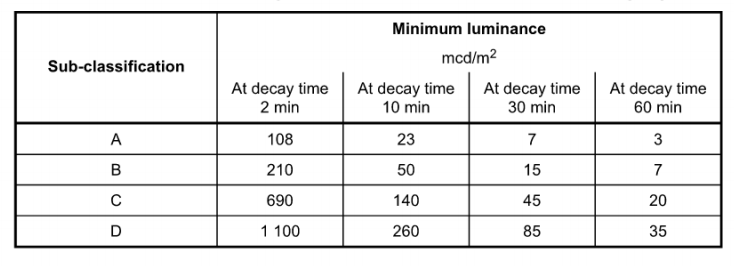
The standard that applies to your project depends on the installation environment and application type. In every case, compliance is measured in mcd/m² at defined time intervals — not in hours of glow.
Photoluminescent Film Performance Grades: Full Comparison
Not every project requires the highest grade. Specifying more than you need adds unnecessary cost; specifying too little creates a critical compliance risk.
Here is how the afterglow intensity of the Minhui Luminous PVC-P Series flame retardant photoluminescent film (flame retardant) aligns with ISO 17398 classifications and real-world applications:
| Model | 10 min (mcd/m²) | 60 min (mcd/m²) | ISO 17398/PSPA Classifciation |
|---|---|---|---|
| MHF-G030P | >50 | >7 | ✓ Meets Class A |
| MHF-G050P | >70 | >10 | ✓ Meets Class B |
| MHF-G100P | >100 | >14 | ✓ Above Class B |
| MHF-G150P | >150 | >20 | ✓ Meets Class C |
| MHF-G200P | >210 | >30 | ✓ Above Class C |
| MHF-G300P | >300 | >35 | ✓ Meets Class D |
| MHF-G500P | >500 | >68 | ✓ Meets Class E & F |
Minhui Luminous PVC-P Series photoluminescent film is certificated with RoHS, IMO, DNV-GL, MED B+D, DIN.
Application guidance:
- For standard compliance (exit signs, stairwell markings, etc.): the MHF-G150P meets ISO 17398 and PSPA Class C requirement.
- For heavy infrastructure and marine (Metros, airports, ships): the MHF-G300P meets ISO 17398 and PSPA Class D requirement.
- For more high-risk environments that requires the highest brightness photoluminescent, the MHF-G500P meets Class E and F requirement.
How to Verify a Photoluminescent Film Supplier's Performance Claims
The "glow hours" printed on a glossy brochure are not verified performance data. Before committing to a supplier, request these four things:
1. Actual Luminance Data (Not Just Glow Hours)
Legitimate manufacturers test strictly according to international or national standards. They will have a specific luminance data sheet and a decay chart ready for you.
2. Pigment Specification and Production Method
The photoluminescent pigment base determines performance ceiling of the photoluminescent film. Manufacturers who makes the glow in the dark pigment in-house control batch consistency and cost-effectiveness. Those who source from third-party suppliers cannot guarantee that performance holds across different production runs.
3. Relevant Third-party Test Report
Materials intended for public buildings or marine applications require specific certifications. Always ask for the actual third-party reports corresponding to your project's environment.
Photoluminescent Film vs. Photoluminescent Rigid Board: Which Format for Which Application?
Photoluminescent materials are available in multiple formats, each suited to different installation conditions:
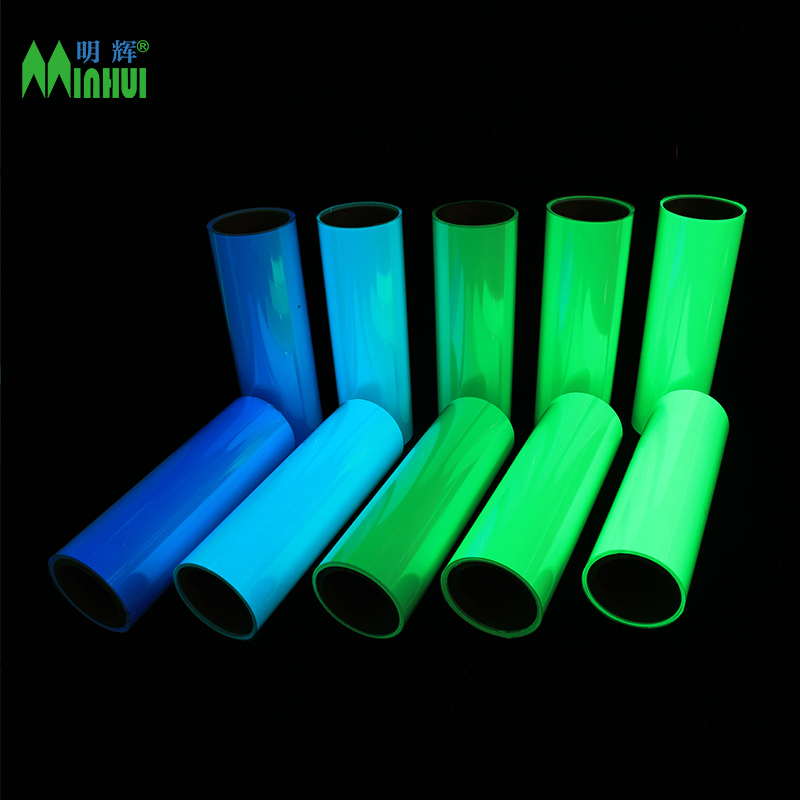
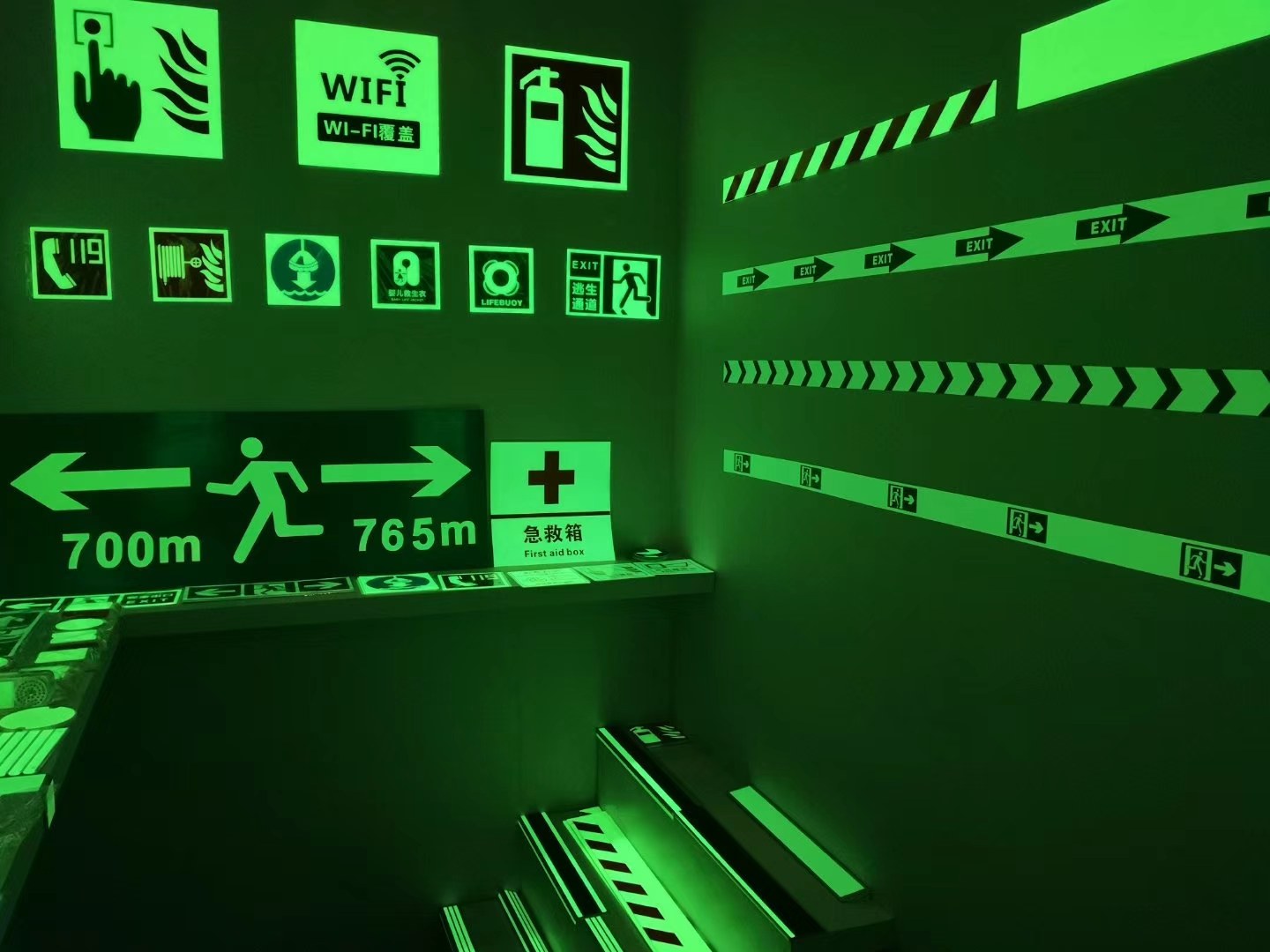
Self-adhesive photoluminescent film: Applied directly to clean surfaces(walls, floors, stair nosings). Great for UV and silk-screen printing. Best for retrofits and custom graphics and shapes.
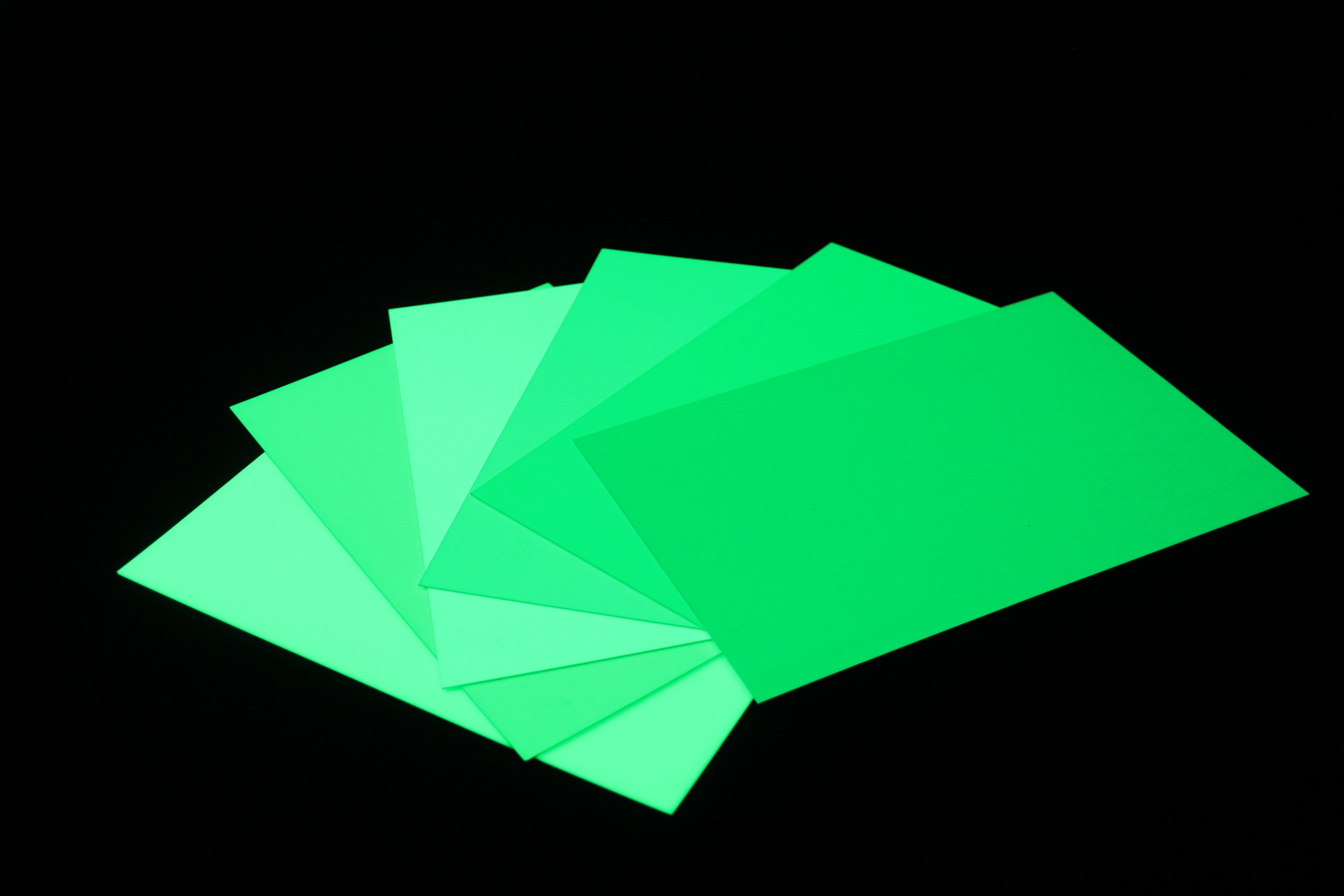
Photoluminescent rigid sheet: Ideal for environments where film adhesion isn't practical, outdoor settings, or applications demanding the absolute highest brightness.
Photoluminescent safety signage: Customized safety signs that are made to order in accordance to the client's requirement on the printing, brightness and substrate.
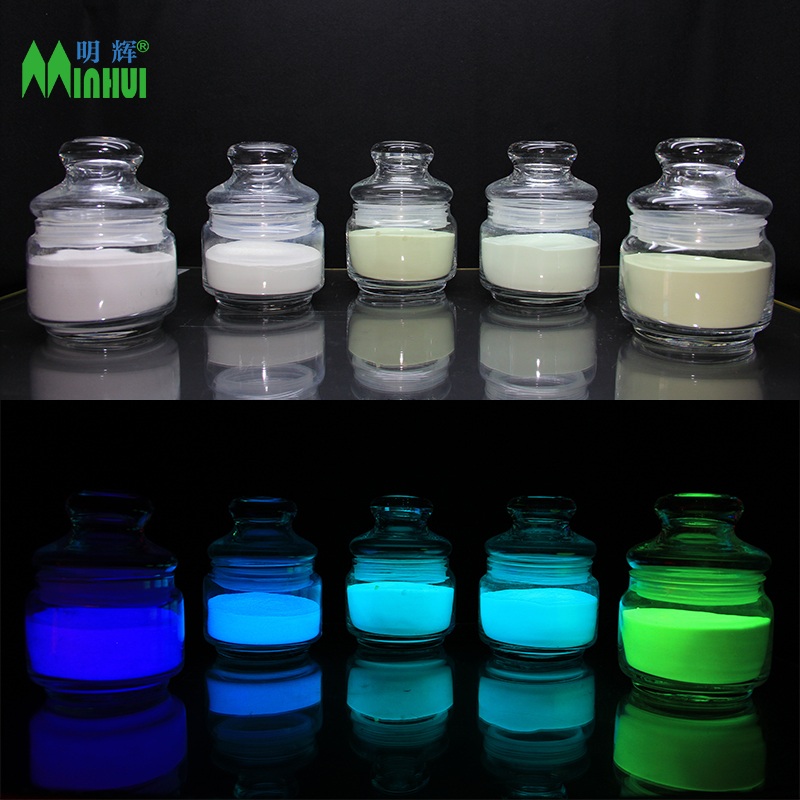
Photoluminescent pigment powder: For OEM customers, including coatings manufacturers, ink producers, masterbatch producers, etc who incorporate photoluminescent pigment into their own product formulations. Performance of the finished product depends on application method, loading rate, and substrate.
Frequently Asked Questions
What is the difference between photoluminescent film and reflective film for safety signage?
Reflective film requires an active light source (like a car headlight or torch) to bounce light back to the viewer.
Photoluminescent film is self-luminous; it stores ambient light and releases it in darkness, making it can still glow during total power failures.
What does mcd/m² mean in photoluminescent film specifications?
Mcd/m² (millicandelas per square metre) is the unit of luminance. It measures light intensity per unit area as perceived by the human eye.
This is the only valid metric for brightness. "Hours of glow" is not a performance unit and cannot be used for compliance verification.
Does photoluminescent film require a power source?
No. Photoluminescent film is passive. It charges from ambient light (natural or artificial) and emits light in darkness without any electrical connection. This is the primary advantage over electrically powered emergency lighting in certain applications: it continues to function during complete power failures and requires no maintenance, wiring, or battery replacement.
How long does photoluminescent film last in service?
Performance longevity depends on the type of photoluminescent film, UV exposure, and installation conditions.
About Zhejiang Minhui Luminous Technology
Zhejiang Minhui Luminous Technology Co., Ltd. has manufactured photoluminescent materials since 2003. We are the leading factory in photoluminescent industry and is the only manufacturer that produce the full glow in the dark supply chain: photoluminescent pigment/masterbatch/film/rigid sheet/safety signage/stone/ceramic.
We offer photoluminescent film and rigid sheet of different luminosity and types for different applications. With IMO, DNV-GL, DIN, MED B+D, RoHS certificates.
Third-party test reports, luminance statistics, and product samples are available on request — before any commitment.
Contact us for consulation on choosing the right model and free sample today!
Post time: Mar-11-2026